Coffee Tamper: How to Choose and Use One (2026 Guide)
Learn how to choose and use a coffee tamper for espresso. Find the right size, tamping pressure, and common mistakes to avoid for better shots.
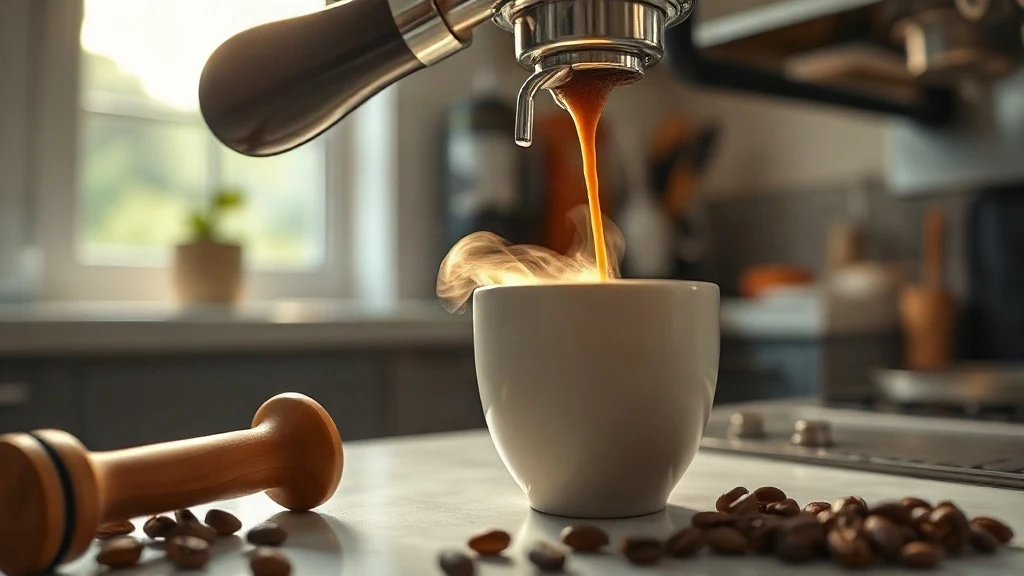
Coffee tamper is a handheld barista tool with a flat base and handle used to compress ground coffee into a dense, level puck inside the espresso machine's portafilter. Tamping ensures water flows evenly through the coffee at full pressure, which is essential for balanced extraction and a flavorful shot.
Related reading: Discover our full guide on Espresiera: Complete Guide to Espresso Machines (2026).
Related reading: Discover our full guide on Coffee Drinks: Complete Guide to 15 Classic Drinks (2026).
Related reading: Discover our full guide on Moka Pot: Complete Guide to Brewing Perfect Coffee (2026).
- Choose a tamper that matches your portafilter basket size, usually 58mm for commercial machines and 49 to 54mm for home machines.
- Tamp with steady, level pressure between 15 and 30 pounds; consistency matters more than brute force.
- A calibrated tamper removes guesswork by clicking when you reach the target pressure.
If you are new to espresso, the tamper is one of the first tools you will buy after the machine and grinder. It looks simple, but it plays a major role in shot quality. A good tamp creates a uniform coffee bed that resists water evenly, while a poor tamp leads to channeling, sour shots, or bitter over-extraction.
This guide covers what a coffee tamper is, how to choose the right size and style, how to tamp correctly, and the mistakes to avoid. By the end, you will know exactly how to use this tool with confidence.
What is a coffee tamper?
A coffee tamper is a small tool with a handle and a flat, circular base. You press it into the portafilter basket to compact the ground coffee before brewing. The base diameter must match the basket size so the coffee is compressed evenly across the full surface.
Tampers come in different materials, weights, and designs. Basic models cost around $15 to $30, while precision tampers with calibrated springs or custom handles can cost $100 or more. The price reflects materials, machining quality, and features, not necessarily better shots.
Why is tamping important for espresso?
Espresso is brewed under pressure, typically 9 bars. When water hits the coffee bed, it follows the path of least resistance. If the coffee is loose or uneven, water rushes through weak spots and under-extracts those areas while over-extracting others. This creates channeling, which shows up as sour, bitter, or thin shots.
Tamping solves this by creating a dense, level puck. A uniform bed forces water to travel through all the coffee at a similar rate, producing a balanced extraction. The Specialty Coffee Association includes proper puck preparation as a core part of espresso standards, and most barista training programs teach tamping as a fundamental skill. If you are still learning the basics, start with what espresso is and how it is brewed.
How do you choose the right tamper size?
The most important spec is the base diameter. It must match your portafilter basket. A tamper that is too small leaves a ring of uncompressed coffee along the basket wall, which causes channeling. A tamper that is too large will not fit or will scrape the basket sides.
Common sizes:
- 58mm: standard for commercial machines and many prosumer models like the Rancilio Silvia and Gaggia Classic Pro
- 54mm: used by Breville (Sage) machines such as the Barista Express and Bambino Plus
- 49mm: found on some older La Pavoni and certain entry-level machines
- 51mm: used by some Delonghi and other budget machines
Check your machine's manual or measure the inside of the basket with a caliper. If you are unsure, the manufacturer's website usually lists the basket size. A 58mm tamper is the most common, so replacement and upgrade options are plentiful. For more details on machine types, see our guide to manual espresso machines.
What are the different types of coffee tampers?
There are several designs, each with a different trade-off between simplicity, consistency, and price.
| Type | Best for | Price range | Key feature |
|---|---|---|---|
| Flat tamper | Beginners | $15-$40 | Simple, reliable, easy to clean |
| Convex tamper | Traditionalists | $15-$40 | Slightly domed base, classic style |
| Calibrated tamper | Consistency seekers | $40-$100 | Clicks at target pressure |
| Leveling tamper | Precision-focused | $50-$150 | Self-leveling base, even pressure |
| Palm tamper | High-volume use | $30-$80 | Ergonomic, uses body weight |
How do you tamp espresso properly?
Follow these steps for a consistent tamp:
- Distribute the grounds evenly in the basket. Use a distribution tool or gently tap the side of the portafilter to level the coffee.
- Hold the tamper with your fingers on top of the handle and your palm over the base. Your wrist should be straight.
- Place the tamper on the coffee and press straight down. Keep the base level with the rim of the basket.
- Apply steady pressure for about 1 to 2 seconds. Do not twist or wiggle the tamper.
- Release and check the puck. It should be flat, smooth, and free of gaps along the edges.
The key is a level, consistent tamp. A slightly lighter tamp done evenly beats a hard tamp done at an angle.
How much pressure should you use when tamping?
Most baristas use between 15 and 30 pounds of pressure. You do not need to press as hard as you can. The goal is a compact, uniform puck, not maximum density.
"Tamping pressure is not critical to espresso quality as long as it is consistent."
Scott Rao, The Professional Barista's Handbook
What matters more is that the puck is level and the coffee is distributed evenly before tamping. If you want to remove guesswork, a calibrated tamper clicks when you reach a set pressure, usually 30 pounds. This helps you repeat the same force every time.
What is a calibrated tamper?
A calibrated tamper contains a spring mechanism that clicks or stops when you apply a preset amount of force. Most are set to 30 pounds, which matches the pressure used in many barista training programs.
Calibrated tampers are useful for beginners who want to build muscle memory and for anyone who struggles with consistency. They cost more than basic tampers, but they remove one variable from the espresso process.
Common tamping mistakes to avoid
- Tamping at an angle: an uneven puck leads to channeling. Keep the base level.
- Twisting the tamper: spinning the tamper can crack the puck and create gaps. Press straight down.
- Tamping too hard: excessive force does not improve extraction and can cause strain over time.
- Using the wrong size: a tamper that is too small leaves uncompressed coffee at the edges.
- Skipping distribution: tamping cannot fix an uneven coffee bed. Distribute grounds first.
- Tamping wet coffee: always dry the basket and tamper between shots to avoid sticking.
How do you care for a coffee tamper?
Tampers are low-maintenance. Wipe the base with a dry cloth after each use to remove coffee oils. Avoid washing wooden handles in water, as they can crack or warp. Metal and resin handles can be rinsed and dried.
Store the tamper in a dry place. If the base becomes scratched or pitted, replace it, because a rough surface can disturb the puck.
Frequently Asked Questions
Do you need a tamper for espresso?
Yes. A tamper is essential for espresso because it compresses the coffee into a uniform puck. Without tamping, water flows through the coffee unevenly, causing channeling and poor extraction. Some machines include a plastic tamper, but a metal one gives better results.
What size tamper do I need?
Measure the inside diameter of your portafilter basket. The most common size is 58mm, followed by 54mm for Breville machines. Check your machine's manual or the manufacturer's website if you are unsure.
How hard should you tamp espresso?
Use 15 to 30 pounds of pressure, applied evenly and straight down. Consistency matters more than force. A calibrated tamper can help you repeat the same pressure every time.
Is a calibrated tamper worth it?
If you struggle with consistency, yes. A calibrated tamper clicks at a preset pressure, usually 30 pounds, so you can repeat the same force shot after shot. It is a worthwhile upgrade for beginners.
Can you use a tamper for other coffee methods?
Not really. Tamping is specific to espresso because it prepares the puck for high-pressure extraction. Other methods like pour-over, French press, or AeroPress do not require a tamper.
Final Thoughts
A coffee tamper is a small tool with a big impact on espresso quality. Choosing the right size, tamping level, and staying consistent will improve your shots more than any other single habit. Start with a basic flat tamper, practice level pressure, and upgrade to a calibrated model if you want more consistency.
For more espresso fundamentals, browse our espresso guides and learn how to make coffee better at home.
Next story

Espressomaschine Bar: Complete Guide for Home & Café (2026)
Espressomaschine bar guide: what it means, how to choose a bar espresso machine for home or café, key features, and top tips for 2026. Quick answers inside.